Make your home look expensive. The old German way.
Which glass at HomeGoods is real, which Dollar Tree candle passes for Ralph Lauren, and the seven rules my father wrote inside a shop cupboard in 1961. 537 pages from three generations of Christmas windows in Bavaria, written for the stores and the homes of America.
You spent the money. It still looks like the store aisle.
✕The tree looks full in the room and thin in every photograph.
✕A $200 cart from HomeGoods, and at home nothing goes together.
✕The mantel looks like a yard sale, and you cannot say why.
✕The lights look cold and blue, and the room feels like a waiting room.
✕Glitter in the carpet until Easter, a giant Santa in the garage until next year.
✕Every January, boxes of things you never really liked.
It was never the money. Nobody ever showed you how to choose.This book does.
Greta at home near Lititz, Pennsylvania
The window book
Three generations wrote it in German. My daughter made me write it in English.
My grandfather Josef opened the Hofmann Christmas House in 1952, on the main street of a little walled town in Franconia. We sold glass ornaments, wooden nutcrackers, straw stars and candles. I stood behind the counter from the age of fourteen, and for thirty Christmases, from 1984 to 2013, I dressed the shop window myself.
Every window went into one thick book under the counter: what we used, what it cost, where people stopped on the sidewalk and what sold first. My father's rules are in it. So are the tests the old glassblower Herr Roth taught my hands: how to tell blown glass from pressed, real brass from paint, wool from plastic.
Then I married an American soldier, and twelve years ago Tom brought me home to Pennsylvania. The first time I walked into a HomeGoods, I stood in the aisle and laughed. The good things were all there, right next to the things that make a home look cheap, under the same kind of sticker. Nobody had ever told anyone how to tell them apart.
One evening my daughter Anna held up the window book and said, “Mama, when you are gone, nobody in America can read this.” So we sat at the kitchen table all winter and wrote it in English.
This book is that winter. If you found me through my videos, you already know a few of these tricks. The book has all the rest.
Short chapters, checklists you can take to the store, and a story from the shop in every one.
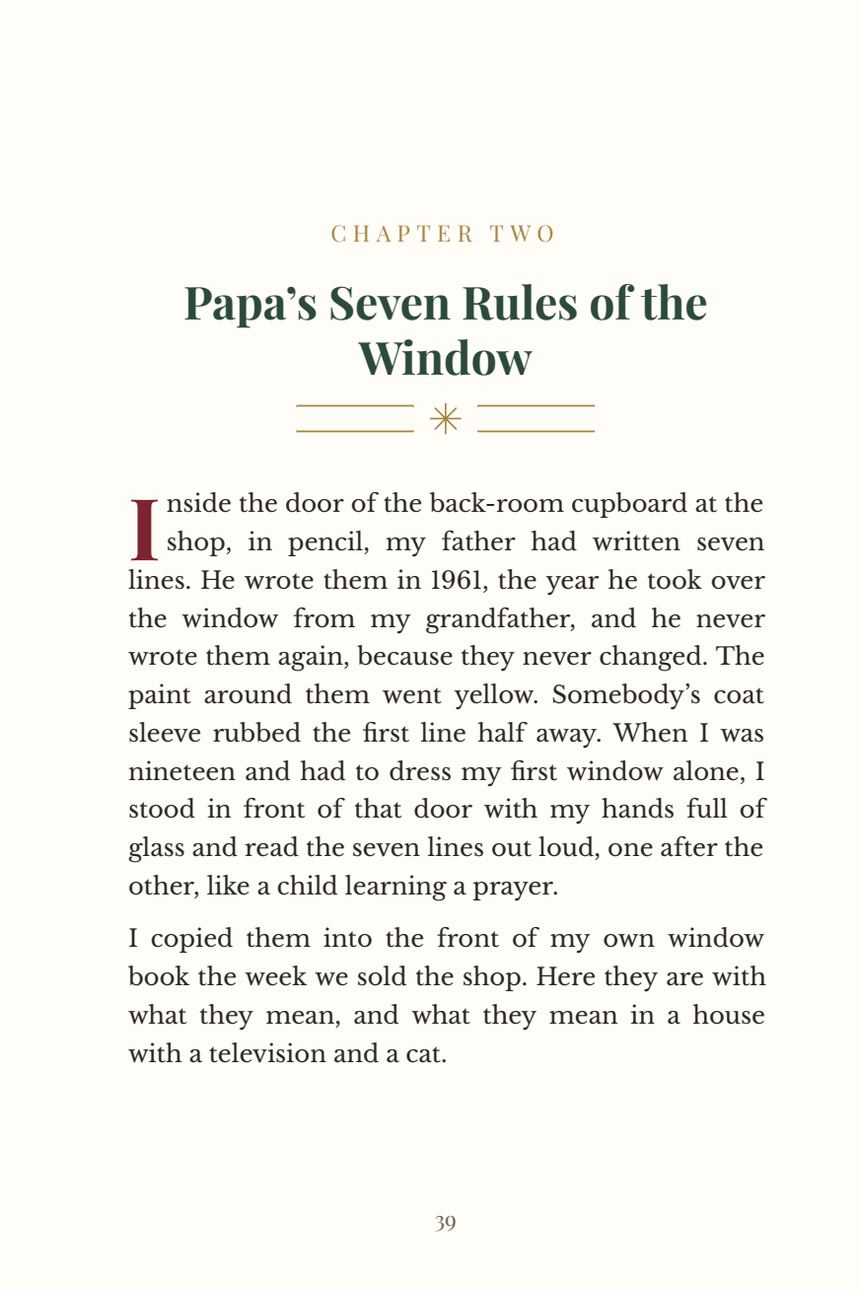
Page 39Papa's seven rules, written inside a shop cupboard in 1961.
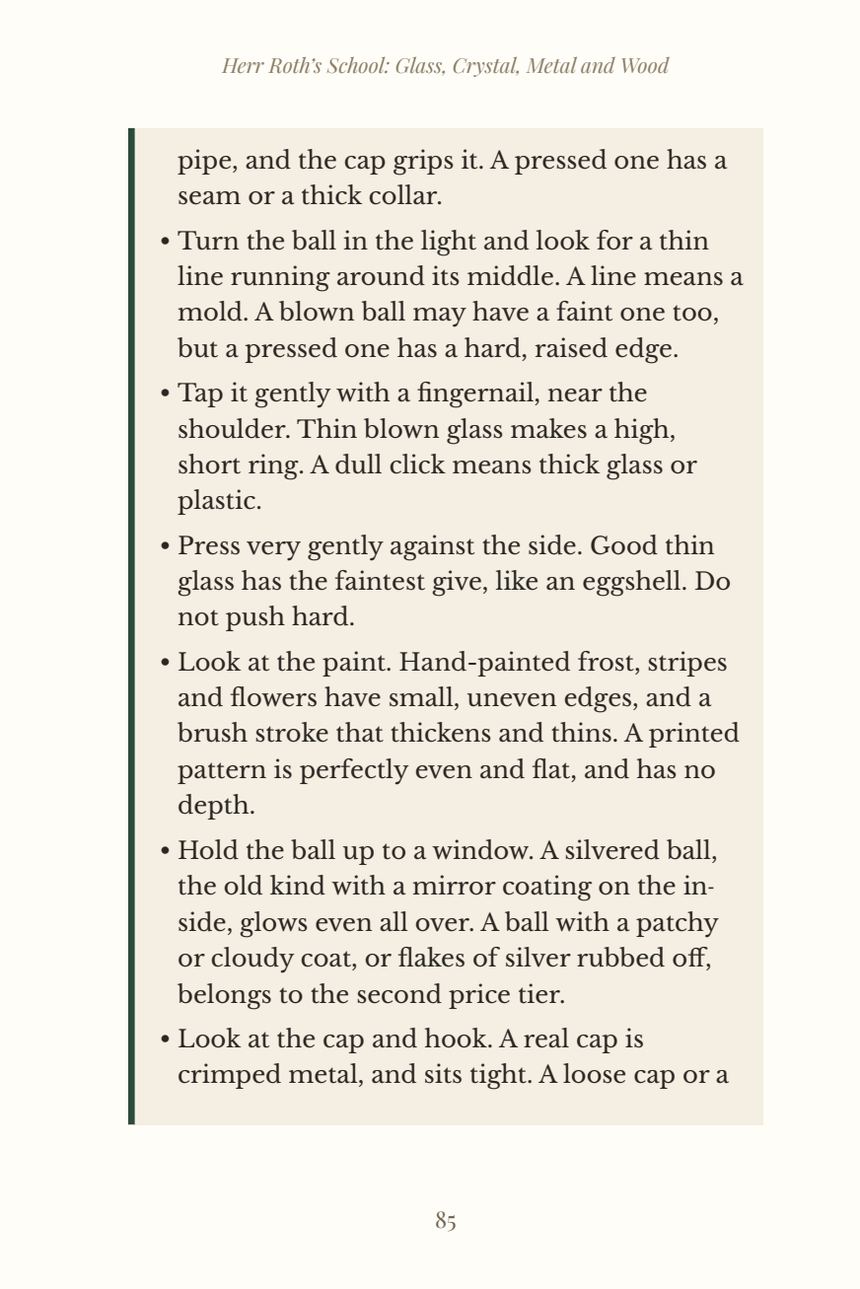
Page 85Blown glass or pressed? Tests you can do in ten seconds.
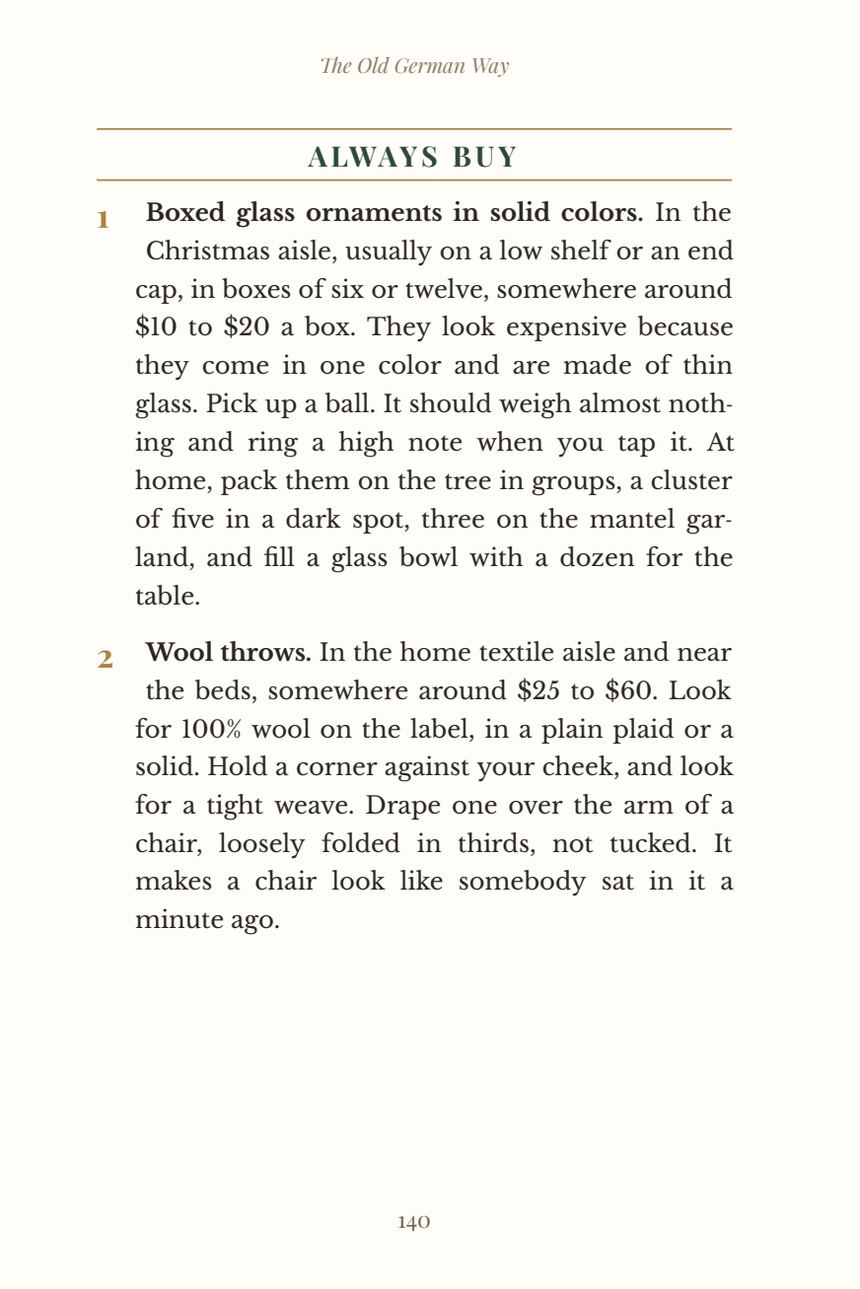
Page 140HomeGoods: the twelve things I always buy there, and why.
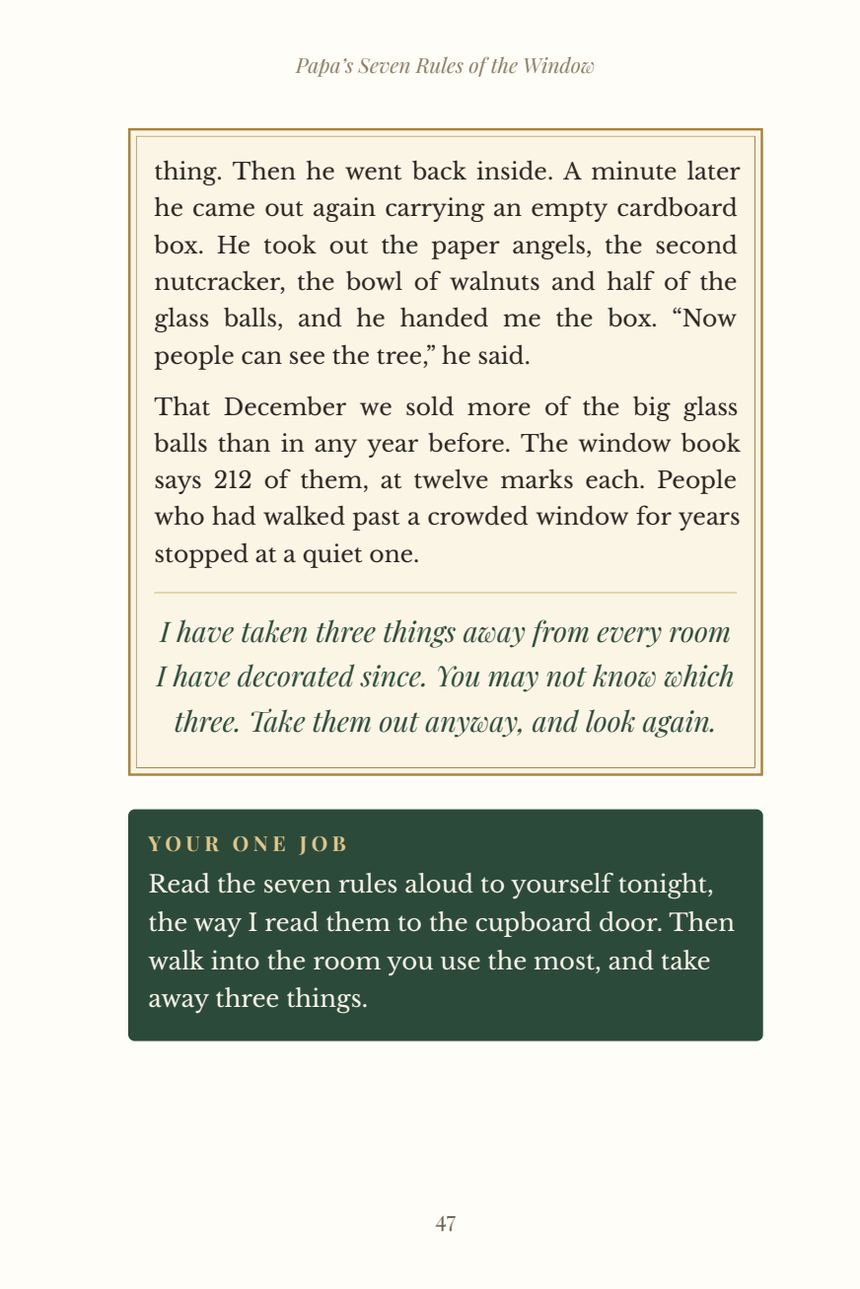
Page 47Christmas 1984: the forty-one things my father carried out of my window.
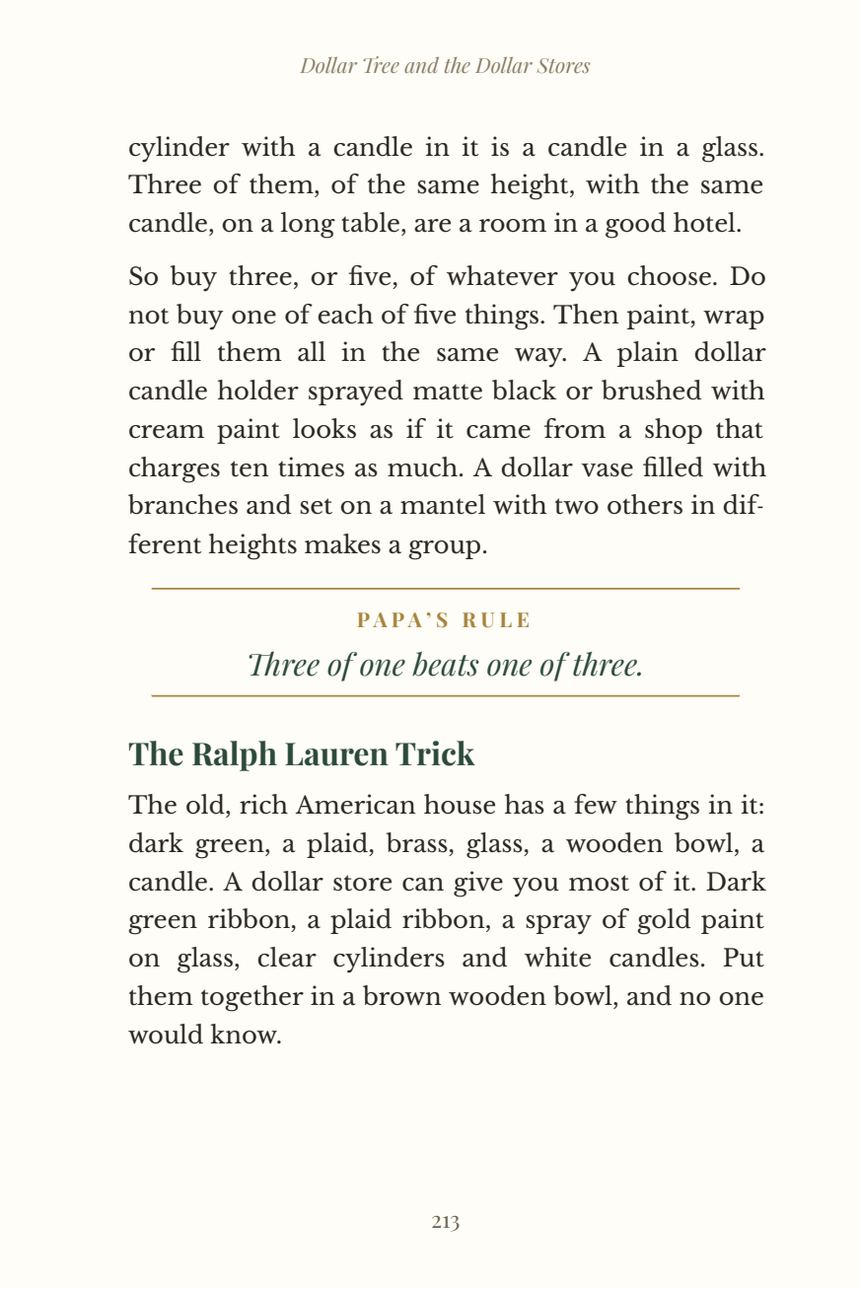
Page 213The Ralph Lauren trick, with candles from Dollar Tree.
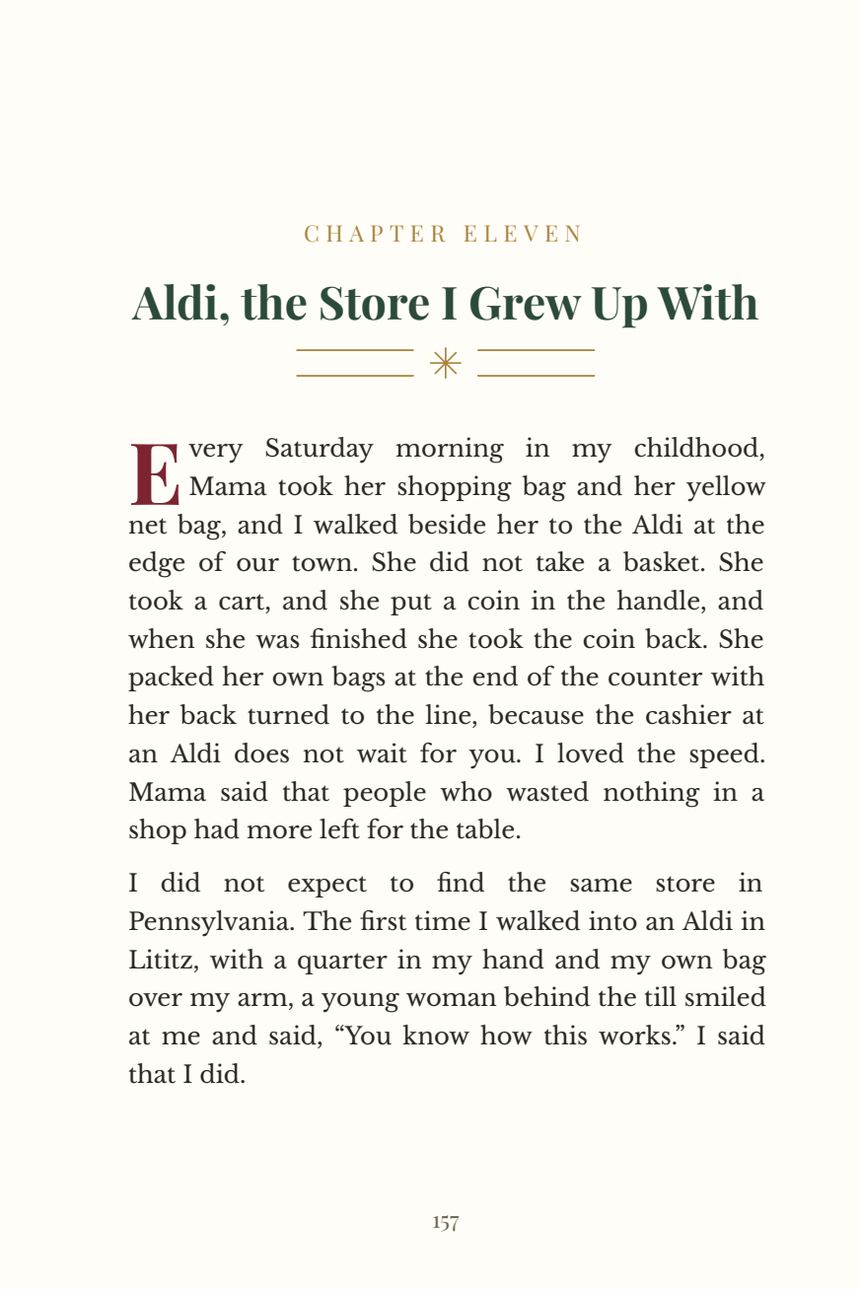
Page 157Aldi, the store I grew up with, and what a German buys there.
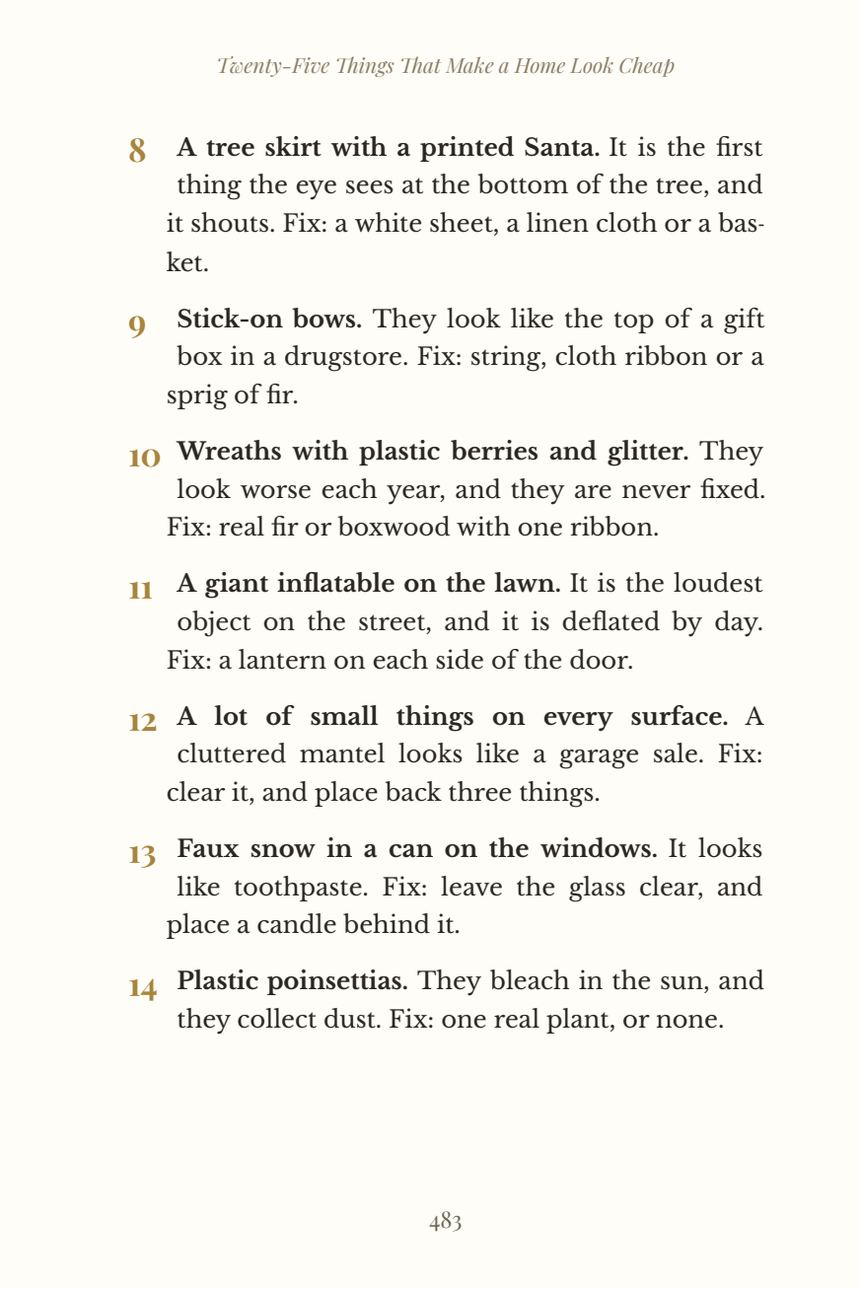
Page 483Twenty-five things that make a home look cheap, and the fix for each.
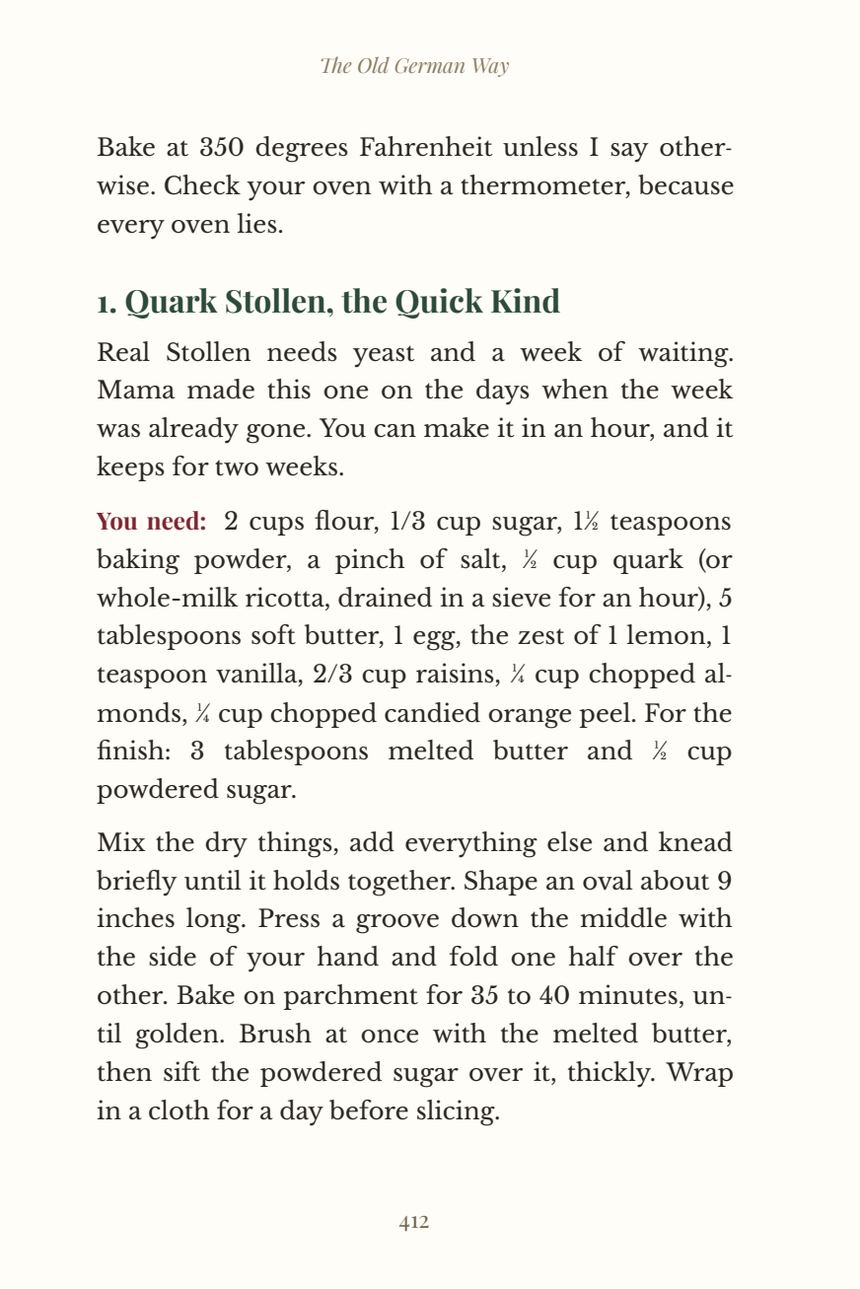
Page 412Mama's quick Stollen. One hour, and it keeps two weeks.
Tap a page to see it bigger
What's inside
46 chapters. Every room, every store, every season.
Part one
The window rules
Papa's seven rules, warm light at three heights, ten color palettes, and why fewer, bigger things always look richer.
Part two
With your hands
238 tests you can do right in the aisle: real glass, real brass, real wool, a good garland, a fresh tree, a pillow worth keeping.
Part three
The store field guide
Sixteen stores, aisle by aisle. What I always buy, what I walk right past, and what I would put in the cart with $50 and with $100.
Part four
Room by room
The front door, the tree, the mantel, the kitchen, the table, the guest room, and small homes with one pair of hands and no ladder.
Part five
The German Christmas
Advent, St. Nicholas boots, Barbara branches, Christmas Eve the German way, twenty old touches nobody does anymore, and fourteen of Mama Liesl's recipes.
Part six
Giving, keeping, letting go
Wrapping like our shop, gifts under twenty dollars that look like forty, taking Christmas down in order, and a home that looks expensive all year.
25+25
Part seven · Training the eye
The two lists everyone asks me for
Twenty-five things that make a home look cheap, with the fix for each. And twenty-five things you will only find in wealthy homes, almost all of them free.
About 7 cents a page. Less than one wreath from the florist.
7-day money-backSecure checkoutNo subscriptionInstant digital book
7DAYS
Seven days, my word on it. Try three things from the book in your own living room. If your home does not look different, write within 7 days and you get every cent back. I would rather that than have you feel taken.
Questions, answered honestly
Before you buy
How do I get the book?
Right after you pay, your download link appears on the screen and is sent to you as well. It opens on your phone, tablet or computer, and you can print any page, like the checklists, and take it to the store. Nothing comes in the mail.
Is it only about Christmas?
No. Christmas is the biggest part, because it was the biggest part of our shop. But the rules, the store guides, the hand tests and the last chapters work every month of the year, from the January reset to spring, summer and Thanksgiving.
I do not want to spend money on new decorations.
Then this book is for you. The first thing it teaches is to take three things away. Much of it works with what you already own, plus a few dollars at the thrift store.
I am not good at decorating. Is this too hard for me?
No. Every chapter says what to do, in what order, and what to check in the store. If you can count to three and turn a candlestick over, you can do every page of it.
I live in a small apartment.
There is a whole chapter for small homes, one pair of hands and no ladder. A small room is the easiest room to make look expensive.
I am not good with computers.
You do not need to be. You pay, and the book is yours. If anything does not open, reply to your receipt and we will walk you through it.
Can I give it as a gift?
Yes, and with Christmas coming many people do. Enter your daughter's, sister's or mother's email at checkout and the book goes straight to her.
Is this a subscription?
No. One payment, one time. No membership, no monthly charge, no free trial that turns into a bill.
What if I don't like it?
Write within 7 days of your purchase and you get your money back. No questions, no hard feelings.
The Old German Way
Christmas Eve, five o'clock. Every lamp is on, and the house glows.
And when your daughter stops in the doorway and asks, “Mom, where did you buy all this?” you will smile. Because it was never about where. It was about how you chose.